Resources
How UDD Technologies Redefines Workplace Collaboration
Discover how UDD Technologies improves workplace collaboration through connected meeting spaces, hybrid solutions, and Athena Space insights.
.png)
Workplace collaboration may seem to be working, but small gaps in how tools and spaces connect often get in the way. These issues show up in everyday moments, especially during meetings, where delays and inconsistencies affect how teams work. More organisations are starting to question whether their current setup is truly fit for purpose.
Let's explore how UDD Technologies redefines workplace collaboration.
The Changing Nature of Workplace Collaboration
Workplace collaboration today goes beyond simple communication between individuals. It now includes how people connect with platforms and physical spaces as part of their daily work. Hybrid work has also changed expectations, with teams expecting flexibility, accessibility, and a consistent experience.
At the same time, many businesses still rely on systems that were not designed to work together. Collaboration tools, meeting room technologies, and workplace infrastructure often operate in isolation. This can affect productivity, create inconsistencies, and make everyday collaboration harder than it should be.
What Redefining Workplace Collaboration Actually Means
Redefining workplace collaboration isn’t about introducing more tools, but about creating a connected environment where communication, technology, and spaces work together seamlessly. It involves aligning digital platforms with physical meeting spaces while ensuring a consistent user experience across the organisation. The goal is to remove friction and make collaboration more intuitive and efficient.
This means bringing together several key elements into one cohesive setup:
- Collaboration platforms such as Microsoft Teams and Zoom
- Audio-visual systems including cameras, microphones, and displays
- Meeting room design and user interface controls
- Workplace technology infrastructure and connectivity
- Support, monitoring, and ongoing management
UDD Technologies’ Approach to Workplace Collaboration
1. End-to-End Workplace Solutions
UDD Technologies supports workplace collaboration through a structured approach that covers solution design, implementation, and ongoing support. Rather than treating collaboration as a single deployment, the focus is on creating environments that work consistently over time. This helps reduce dependency on multiple vendors and disconnected systems. As a result, organisations gain a more reliable and manageable collaboration setup.
2. Integration of AV and Collaboration Platforms
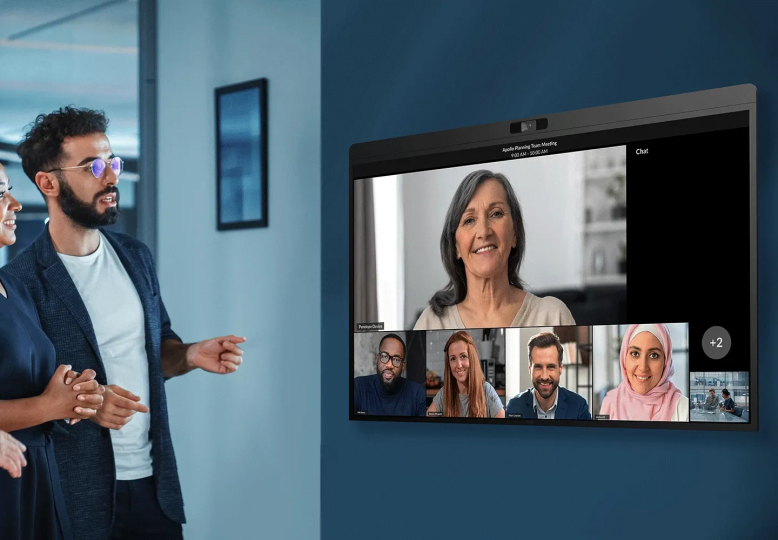
A key part of redefining collaboration is making sure platforms like Microsoft Teams work properly within meeting rooms. It’s not just about the software, but how it connects with the screens, cameras, microphones, and controls people use every day. When everything is set up to work together, meetings become easier to start and run. This removes a lot of the small delays and issues that usually slow things down.
3. Hybrid Collaboration Environments
Collaboration spaces are now expected to work just as well for remote participants as they do for people in the room. This means paying close attention to layout, audio pickup, and camera placement so everyone can be seen and heard clearly. The goal is to create meetings that feel balanced and inclusive, regardless of where people are joining from. Simple touches like one-touch meeting access also make day-to-day use much easier.
4. Data-Driven Workplace Insights
Modern workplace collaboration increasingly relies on data to improve performance and efficiency. UDD Technologies incorporates analytics through its Athena Space platform to help organisations understand how spaces are used and where improvements can be made. This includes insights into meeting room usage, occupancy patterns, and system performance. By using this data, businesses can make more informed decisions about their workplace strategy.
5. Scalable and Future-Ready Design
Workplace technology needs to keep up as the organisation grows. Systems are designed to work across multiple locations while keeping the experience consistent for users. Standardisation helps make deployments easier to manage and support over time. At the same time, there is enough flexibility to adapt as technology and ways of working continue to change.
How to Evaluate Your Current Workplace Collaboration Setup
Evaluating your workplace collaboration setup starts with understanding how people across the organisation use both technology and physical spaces. What matters is whether your tools, meeting spaces, and systems work together in a consistent and reliable way. You see these gaps most clearly during meetings, where delays, joining issues, and inconsistent experiences affect how people collaborate.
A clearer view comes from combining user experience with actual data. Athena Space provides visibility into how spaces are used, how systems perform, and where issues occur, helping organisations move beyond assumptions and make informed improvements. This makes it easier to identify what is working, what is underused, and what needs to be fixed.
When evaluating your setup, focus on:
- Alignment between collaboration platforms and meeting room systems
- Reliability of audio, video, and connectivity
- Ease of use, including meeting controls and workflows
- Consistency across different rooms and locations
- Ability to scale as the business grows
- Level of support, monitoring, and maintenance
Final Thoughts
Workplace collaboration is no longer something that can be left to evolve on its own. It requires clear ownership, ongoing attention, and a willingness to challenge how systems are currently set up. Organisations that take a more structured approach are better positioned to avoid inefficiencies that often go unnoticed.
A more effective way forward is to treat collaboration as part of a broader workplace strategy rather than a standalone initiative. This means aligning decisions with how the organisation operates, how teams interact, and how environments are used. Consistency comes from intentional design, not from adding more tools.
UDD Technologies plays a role in this by helping organisations take a more coordinated approach to workplace collaboration. With the support of platforms like Athena Space, businesses gain greater awareness and control over their environments. Collaboration can then be maintained and improved over time without adding unnecessary complexity.
Is your workplace collaboration setup delivering the consistency your teams expect? Contact us to build a more reliable and manageable collaboration environment.
Resources
.png)
.png)
.png)
.png)
.png)
.png)
.png)