Resources
Measuring the ROI of Workplace Technology Investments
See how workplace technology and AV solutions drive real ROI when their impact is measured, improving productivity, collaboration, and overall efficiency.
.png)
Workplace technology has quietly become one of the biggest drivers of how organisations operate, collaborate, and scale. From meeting rooms to cloud platforms, these investments shape everyday performance in ways that are not always obvious at first glance. The real question is no longer whether to invest, but how to prove the value of what is already in place.
Let’s dive in and look at how organisations can clearly measure, evaluate, and maximise the return on their workplace technology investments.
Understanding ROI in Workplace Technology
Return on investment in workplace technology goes beyond simple cost savings. It measures how technology improves productivity, efficiency, and overall business outcomes over time. Unlike traditional assets, the benefits are often spread across people, processes, and performance. This makes ROI both a financial and operational metric.
Workplace technology ROI typically includes tangible gains such as reduced operational costs and faster workflows. It also includes intangible benefits like improved employee experience and better collaboration. These softer gains often translate into long-term financial value through retention and performance. Understanding both sides is critical to accurate evaluation.
A clear ROI framework helps organisations make informed decisions rather than reactive ones. It allows leaders to compare technologies objectively and prioritise investments with the highest impact. Without this clarity, technology spending risks becoming fragmented and inefficient. ROI measurement provides the structure needed for sustainable growth.
Types of Workplace Technology Investments
Collaboration & Communication Tools
These include video conferencing platforms, unified communications systems, and team collaboration software. They enable real-time interaction across locations and time zones. Their value lies in reduced travel costs, faster decision-making, and improved team alignment. Adoption and consistent usage are key to realising full ROI.
Audio Visual & Meeting Room Technology
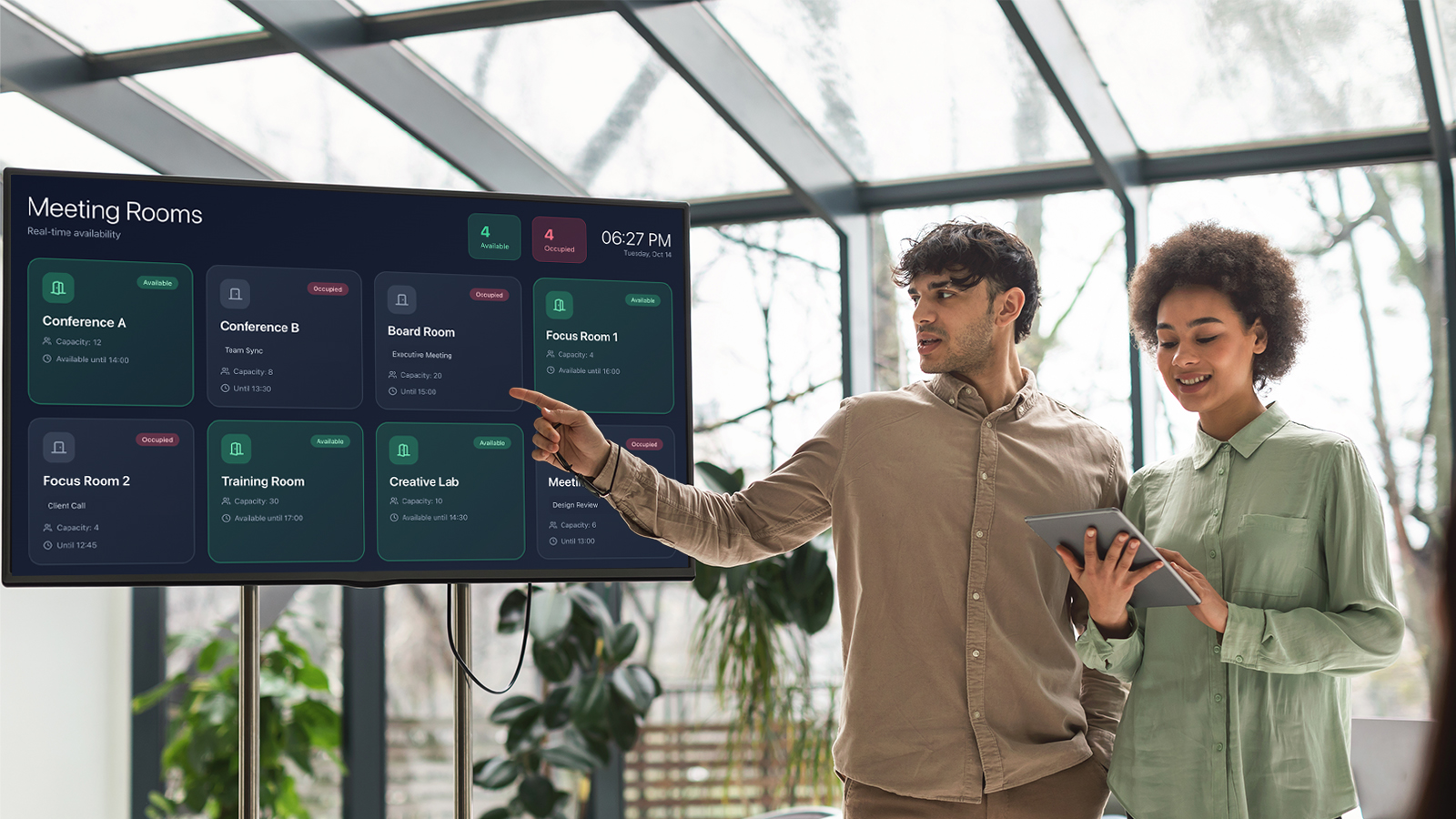
AV solutions cover displays, wireless presentation systems, room scheduling tools, and conferencing hardware. They improve meeting efficiency and reduce time lost to technical issues. Modern AV systems support hybrid work and scalable collaboration. ROI is often seen through higher meeting productivity and better space utilisation.
Cloud Computing & SaaS Platforms
Cloud services provide scalable access to applications, storage, and computing power. They reduce the need for on-premise infrastructure and lower maintenance costs. Subscription models also allow predictable budgeting. ROI is driven by flexibility, resilience, and faster deployment.
IT Infrastructure & Network Solutions
This includes servers, networking equipment, and connectivity upgrades. Reliable infrastructure underpins all digital workplace tools. Poor performance here directly impacts productivity and user satisfaction. ROI comes from stability, reduced downtime, and future readiness.
Cybersecurity & Data Protection Technologies
Security tools protect systems, data, and users from evolving threats. While ROI is harder to quantify, the cost of inaction is significant. Avoided breaches, regulatory compliance, and business continuity form the core value. These investments safeguard both financial and reputational assets.
Workplace Automation & AI Tools
Automation platforms and AI-driven tools streamline repetitive tasks and support smarter decision-making. They reduce manual workload and improve accuracy. Over time, they enable teams to focus on higher-value work. ROI is reflected in efficiency gains and improved output quality.
Methods & Best Practices Calculating ROI
Cost Benefit Analysis
This method compares total investment costs against measurable financial gains over a defined period. It includes hardware, software, implementation, training, and ongoing support expenses. Benefits may cover time savings, reduced operational overheads, lower error rates, and improved efficiency across teams. Setting a clear time horizon helps ensure results are realistic and aligned with business planning cycles.
Productivity Measurement
Productivity-based ROI focuses on output before and after technology implementation. Common metrics include task completion time, meeting effectiveness, employee capacity, and throughput. This approach directly links workplace technology to measurable performance improvements. It is most effective when supported by reliable baseline data and consistent measurement over time.
Total Cost of Ownership
Total cost of ownership looks beyond upfront purchase costs to capture the full lifecycle expense of a solution. This includes maintenance, upgrades, licensing, support, and eventual replacement. TCO provides a more accurate picture of long-term value and financial commitment. Comparing TCO across solutions helps organisations avoid unexpected costs and poor investment decisions.
User Adoption & Usage Analytics
Usage data reveals whether workplace tools are delivering real, sustained value. Low adoption often indicates poor user experience, insufficient training, or misalignment with actual workflows. Analytics help identify which features are used, underused, or ignored entirely. Strong adoption rates are a reliable indicator of positive ROI and long-term success.
Qualitative Feedback & Surveys
Employee feedback captures benefits that quantitative metrics alone cannot explain. Insights into satisfaction, collaboration quality, and ease of use provide important context to performance data. Surveys and interviews often highlight friction points or hidden value. When combined with usage and cost data, qualitative feedback creates a well-rounded ROI assessment.
Benchmarking & Comparative Analysis
This method compares performance against internal benchmarks or industry standards. It helps determine whether improvements are genuinely driven by the technology or by external factors. Benchmarking provides context for ROI figures and supports more objective decision-making. It is particularly useful when evaluating similar tools or planning future investments.
Common Challenges in Measuring ROI
Measuring ROI for workplace technology is rarely straightforward. People, processes, and systems interact in complex ways, and the benefits of new tools often take time to appear. Understanding these challenges upfront helps organisations make more accurate and realistic assessments of the value technology delivers.
Key challenges affecting technology ROI:
- Difficulty Quantifying Intangible Benefits: Not all benefits translate neatly into financial figures. Improved morale and collaboration are hard to measure directly. However, they influence retention and performance over time. Ignoring them understates true ROI.
- Delayed Value Realisation: Technology benefits often take time to materialise. Training, adoption, and process changes slow initial impact. Early evaluation may appear negative or neutral. A phased assessment approach helps address this.
- Incomplete or Inaccurate Data: Without baseline metrics, comparisons become unreliable. Inconsistent data collection skews results. This leads to assumptions rather than evidence-based conclusions. Strong measurement starts with good data discipline.
- Overlooking Change Management Costs: Change management is often underestimated or excluded. Training, communication, and support require time and resources. Without them, adoption suffers. This directly affects ROI outcomes.
Strategies to Maximise ROI from Workplace Technology
ROI works best when workplace technology supports clear business goals. Tools should solve real challenges, like improving meeting efficiency, collaboration, or information sharing, rather than being implemented because they are new or popular. Setting measurable targets, like faster meeting setup, better content sharing, or reduced downtime, makes it easier to track results.
User adoption is critical for realising returns from AV and workplace technology. Employees need guidance, training, and support on how to use meeting room systems, digital signage, or collaboration tools effectively. Clear communication of benefits and practical examples encourages engagement and consistent usage. If the technology is underused, its potential value cannot be achieved.
Continuous monitoring keeps workplace technology effective over time. Tracking how AV systems and collaboration tools are used shows what works and what needs improvement. Tools that do not perform should be upgraded or replaced, while successful solutions can be expanded across the organisation. Regular reviews ensure technology continues to improve efficiency and support better collaboration.
Conclusion
Workplace technology delivers the most value when its impact is measured clearly. Tangible gains, like faster meetings and less downtime, combined with better collaboration and employee experience, show the real ROI. Using reliable data helps organisations make smart decisions about which tools to improve or expand. When approached the right way, technology becomes a powerful advantage, not just a cost.
At Unified Distribution, we provide solutions that make workplace technology work smarter, from AV systems to collaboration tools. Driving adoption, tracking usage, and improving systems over time unlocks lasting value. Technology that is used well boosts productivity, engagement, and efficiency. Continuous evaluation and improvement ensure that every investment contributes meaningfully to business growth.
Take the next step in unlocking the full value of your workplace technology investments. Contact us and let us help you optimise your AV systems and collaboration tools for maximum impact.
Resources
.png)
.png)
.png)
.png)
.png)
.png)